
Resources
Where to start, how to learn the method and the tool, and where to look something up. Every resource is openly licensed: share and adapt it, crediting URDAD.
Start here
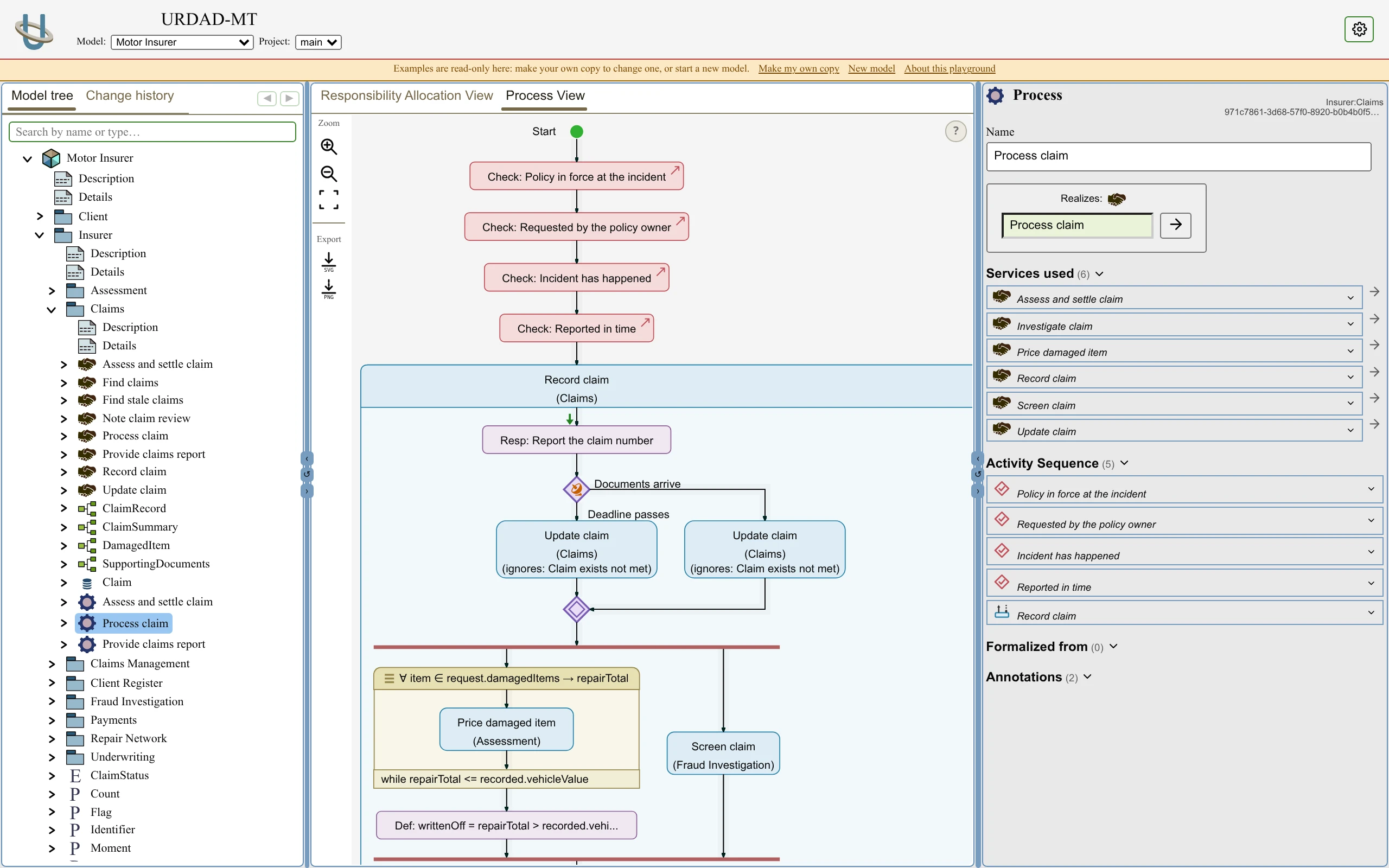
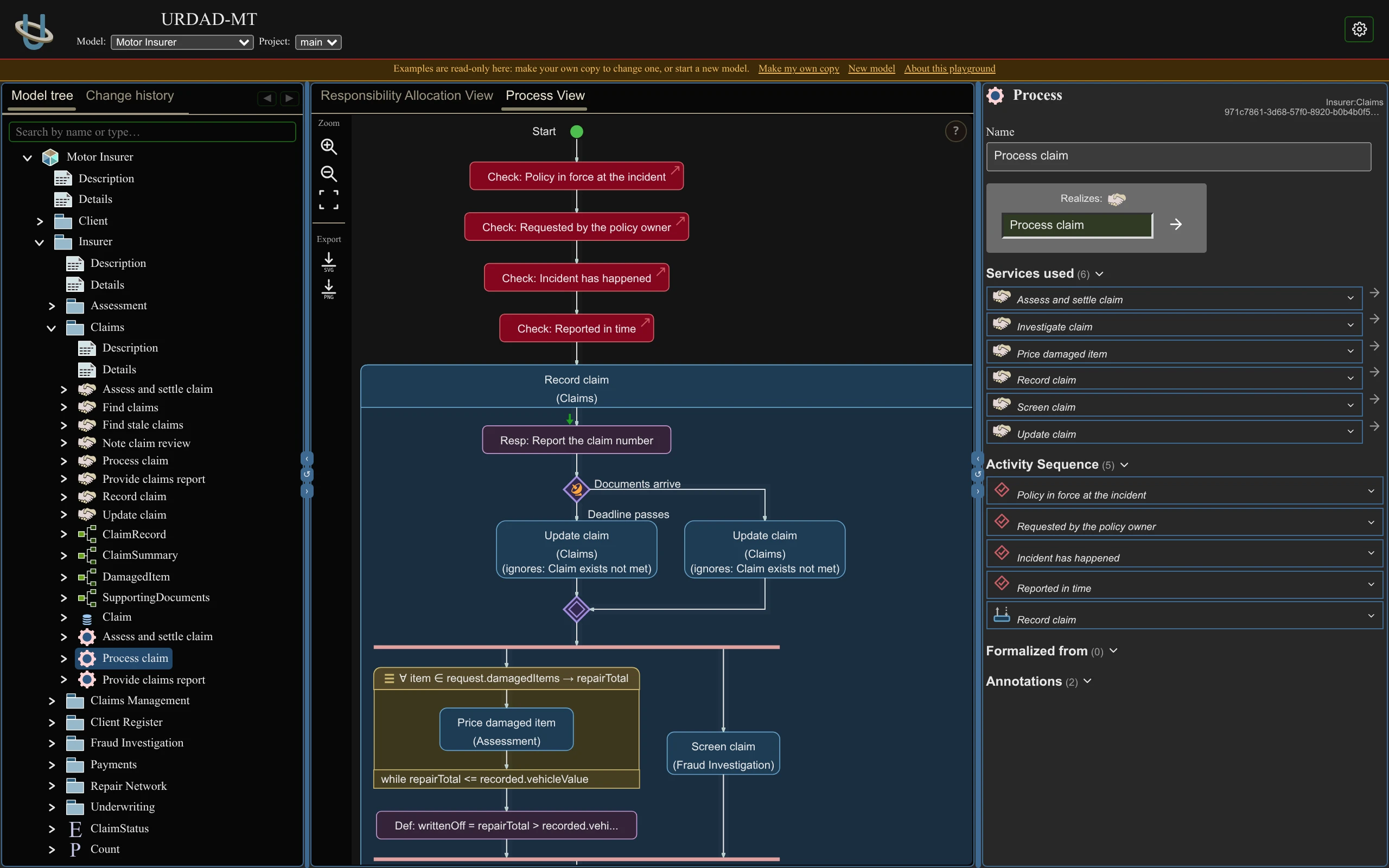
Explore the playground
Interactive · play.urdad.org ↗
The modelling tool in your browser, with the example models open. Explore every view, or build a model of your own.
Follow a worked example
Guide · docs.urdad.org ↗
The method applied step by step to a small bank, from one use case to the process which realises it.
Open an example model
Download
Complete models of a bank, an insurer and an auctioneer, each with its views and the documentation the tool generates.
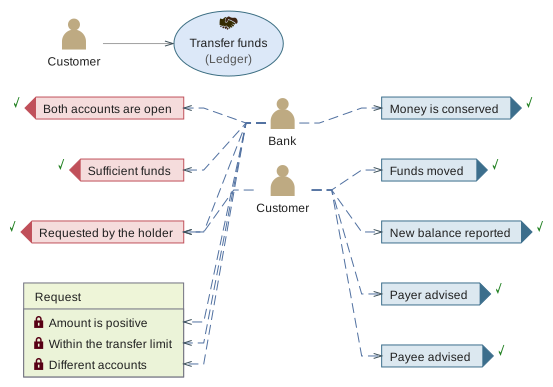
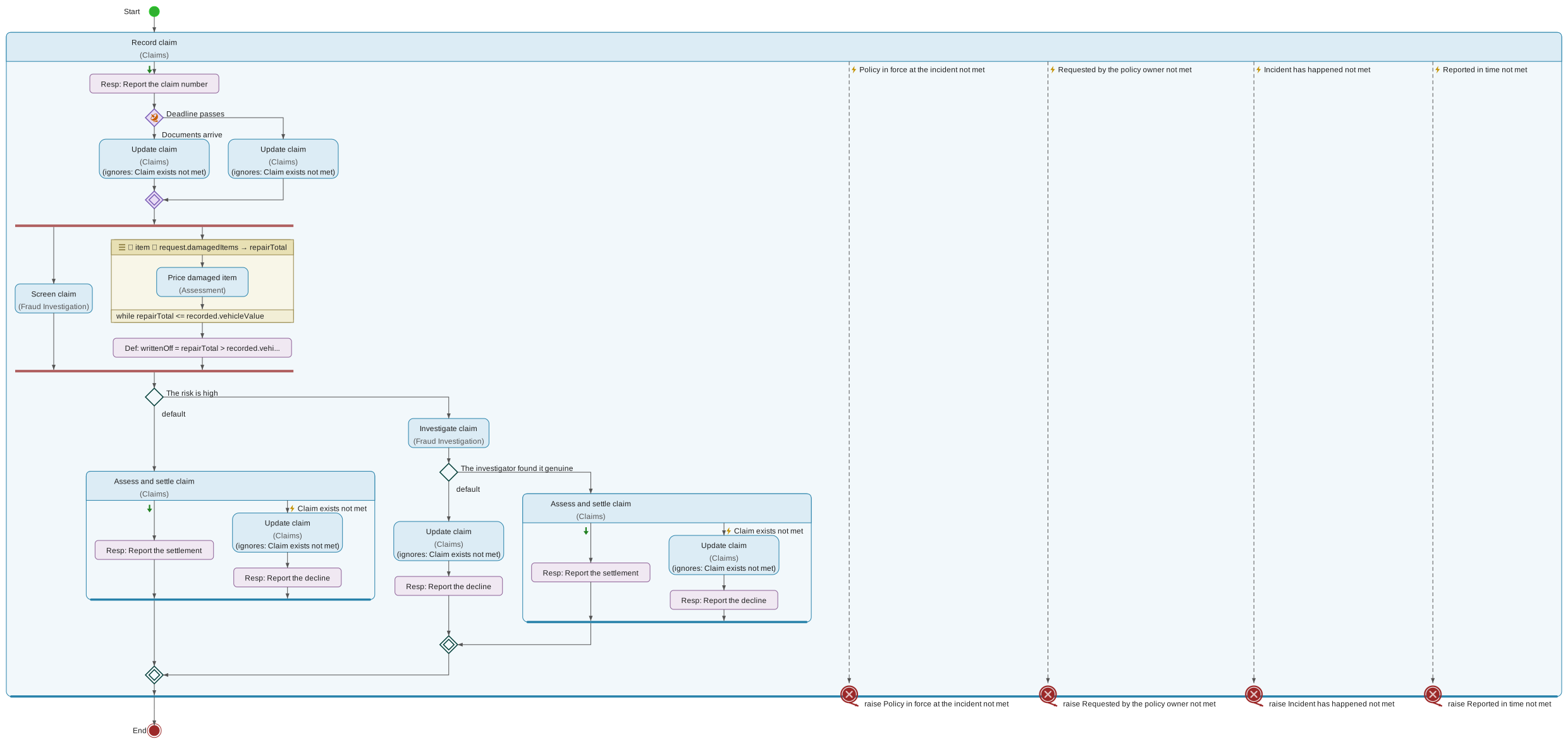
Understand the method and the tool
The URDAD method
Guide · docs.urdad.org ↗
The method on its own, independently of any tool: its principles, its three phases, and how they repeat at every level.
Why URDAD?
Guide · docs.urdad.org ↗
The case for one model of the business: what it replaces, and what an organisation gains from it.
Modelling in the tool
Guide · docs.urdad.org ↗
The modelling tool’s views and elements, and how a team edits one model together in real time.
URDAD for domain-driven design teams
Overview
Bounded contexts with contracts at their boundaries, checked as you model and tested without writing a test.
URDAD for financial services
Overview
Every change evidenced, every provider held to contract, and the record kept for your auditors, under DORA, GDPR or POPIA.
Look something up
User manual
Reference · docs.urdad.org ↗
How the tool behaves, from modelling through projects and security to execution and deployment.
Cheat sheet
Reference · docs.urdad.org ↗
Every symbol of every view on two pages, as the tool draws it, and what it means.
Glossary
Reference · docs.urdad.org ↗
Every term and acronym of the method, the tool and its documentation, defined once, each at an address of its own.
URDAD model specification
Specification · docs.urdad.org ↗
Every element of a URDAD model, its attributes, relationships and meaning, generated from the model’s schema.
URDAD-OCL specification
Specification · docs.urdad.org ↗
The language of a model’s conditions and constraints: its grammar, what each expression means, and its standard library.
URDAD-FEEL specification
Specification · docs.urdad.org ↗
The same specifications in the notation of DMN’s FEEL, and how each reads as URDAD-OCL.
The model's JSON schema
JSON schema
The schema of a model file as the tool writes it, served at the address its
$idnames.